
Recently, BASF Shanshan and Central South University held a semi-annual summary meeting for the joint development project "Preparation and Mechanism Study of Low-Cobalt Ultra-High Nickel Cathode Materials." Dr. Xia Xin, Chief Technology Officer of BASF Shanshan, led the ternary solid-state project team to conduct in-depth and fruitful discussions with the expert teams from the Central South University National Graduate College For Elite Engineers and the School of Metallurgy and Environment on project cooperation progress, technological breakthrough achievements, and future development directions.
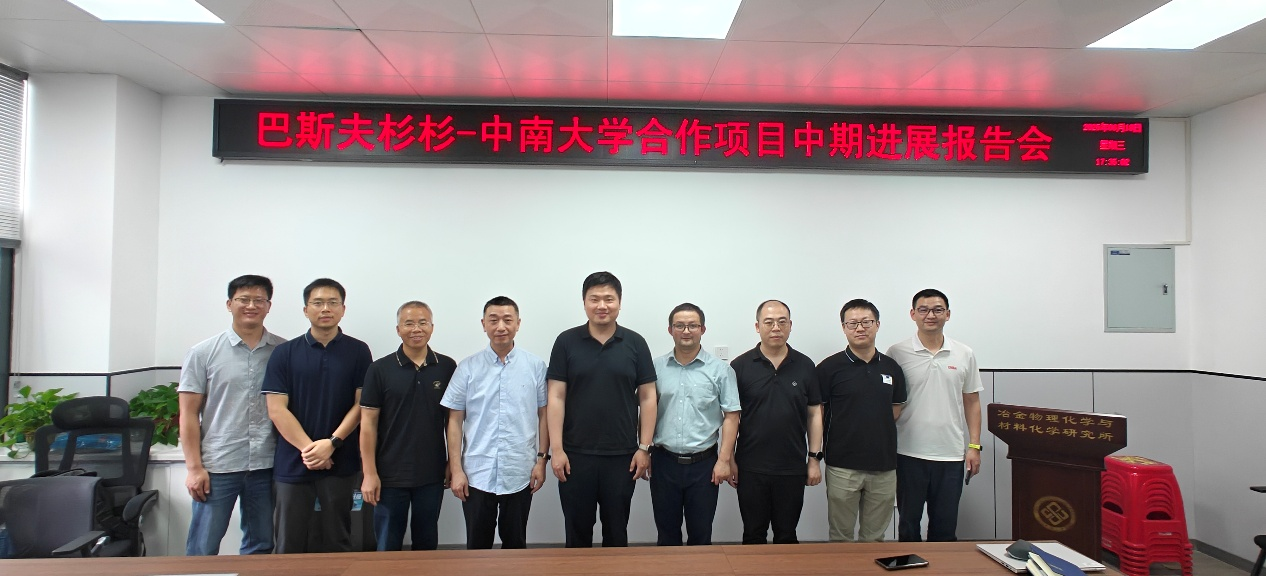
Over three years of cooperation, the project has achieved significant breakthroughs in core technology areas. According to Professor Wang Jiexi of Central South University, during the cooperation period, the team focused on key directions including the synthesis and modification of ultra-high nickel cathode materials, solid-state battery and solid-state cathode material development, and made all-out efforts to tackle multiple technical bottlenecks and industry pain points. In-depth research was conducted on topics such as outer coating technology, doping modification, and morphology control of ultra-high nickel materials, solid-state battery construction and modification, and interface failure and modification of high-nickel/sulfide solid-state batteries, achieving significant progress and laying a solid foundation for the performance upgrading of new energy battery cathode materials.
During the cooperation period, both parties have jointly applied for over ten patents and published multiple academic papers, and have jointly cultivated 7 full-time doctoral students, 5 master's students, and 4 engineering doctoral students, achieving deep industry-university-research cooperation and intellectual property solidification of technical achievements, providing solid guarantees for subsequent technical application and market transformation.
Xia Xin gave high affirmation to the cooperation achievements, stating that both parties have fully leveraged their respective advantages, not only clarifying the failure mechanisms of ultra-high nickel cathode materials and forming modification solutions, but also building a research and development framework for next-generation solid-state battery cathode materials.
Xia Xin pointed out that against the backdrop of an increasingly mature new energy market and continuously rising electric vehicle penetration rates, the dual breakthrough of ternary materials in cost reduction and safety performance is of great significance for the sustainable development of the industry. Looking to the future, both parties agreed that they can continue to deepen collaboration in fields such as low-cost ternary cathode materials, low-pressure solid-state cathodes, failure analysis of all-solid-state cathodes, and lithium-rich manganese materials for solid-state batteries, contributing more to the development of low-cost, high-safety liquid cathode materials and next-generation solid-state battery cathode materials.
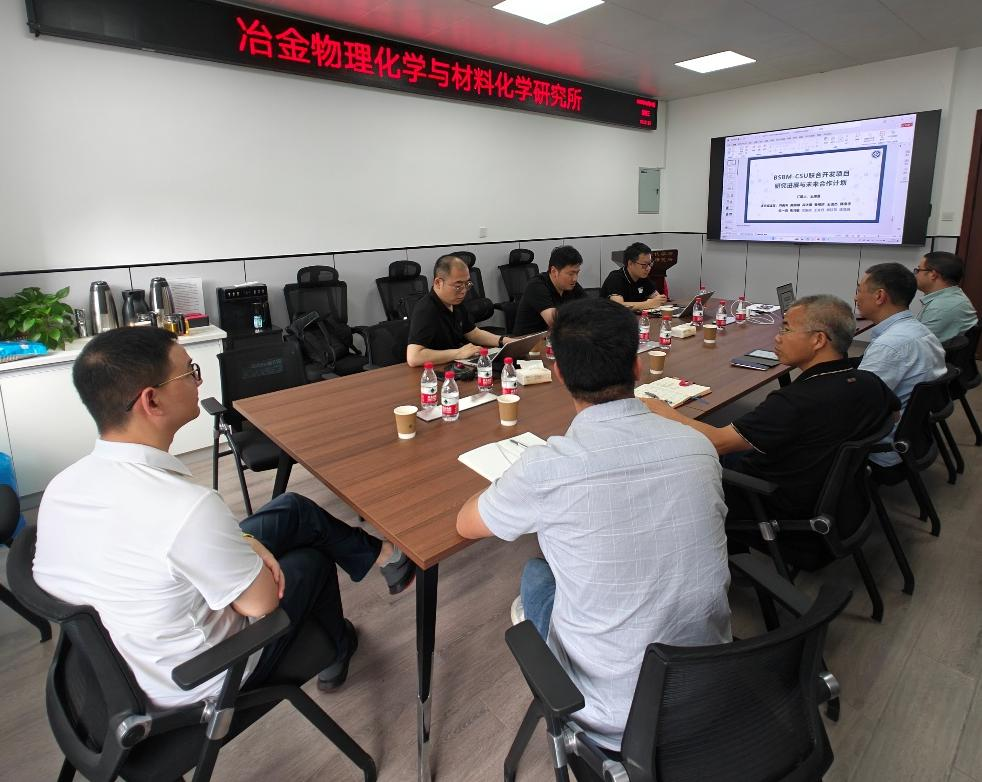
The core value of industry-university-research synergy lies in rooting technological innovation in industrial soil. BASF Shanshan has been deeply engaged in the battery materials industry for 22 years, conducting long-term industry-university-research cooperation with top research institutions such as Central South University and the Institute of Physics, Chinese Academy of Sciences. The strong synergy formed between talent cultivation, the enterprise's industrialization experience, and the university's basic research strength accelerates innovation to scale new heights and serve global customers.