
Release Date: November 27, 2024 Source: CCTV-1 Comprehensive Channel "Let’s Talk"

When you hear the word "metallurgy", what comes to mind? Is it ancient alchemists hammering away in front of flickering forges? Or miners exploring deep, mysterious mines? Metallurgy is about humanity’s profound understanding and application of materials. From the ancient Bronze and Iron Ages to modern aerospace and electronic products, metallurgy has always been an important driving force for the development of civilization. In this episode of "Let’s Talk", Academician Zhao Zhongwei of the Chinese Academy of Engineering and Professor of Central South University is invited to the program. As a top expert who has solved many world-class problems in the metallurgical industry, he will uncover the mystery of the metallurgical world for young people and tell the "great stories" behind "small metals".
[He Extended the Service Life of China’s Tungsten Resources from 5 Years to 20 Years]
Did you know? China has the world’s largest tungsten reserves and supplies 80% of the world’s tungsten products. However, only about 20% of tungsten ore is wolframite, and 80% is scheelite. Wolframite is very easy to smelt, but scheelite has always been unusable. Even if we reluctantly decompose scheelite using the traditional method for wolframite, we are faced with problems such as low efficiency and difficult disposal of waste. Faced with this problem, Academician Zhao took a different approach, drew inspiration from the geochemical properties of scheelite, established a new method for alkaline leaching of scheelite, and extended the service life of China’s tungsten resources from 5 years to 20 years.
In the program, Academician Zhao told everyone that the knowledge we have learned helps us, but it may also become a limitation. At such times, we need to open our minds, absorb new knowledge from other disciplines, and we may have new ideas to solve problems. The key to any scientific research is to have ideas and the courage to break away from path dependence.
[Successfully "Unlocked" the Lithium Treasure Trove of the Qinghai-Tibet Plateau!]
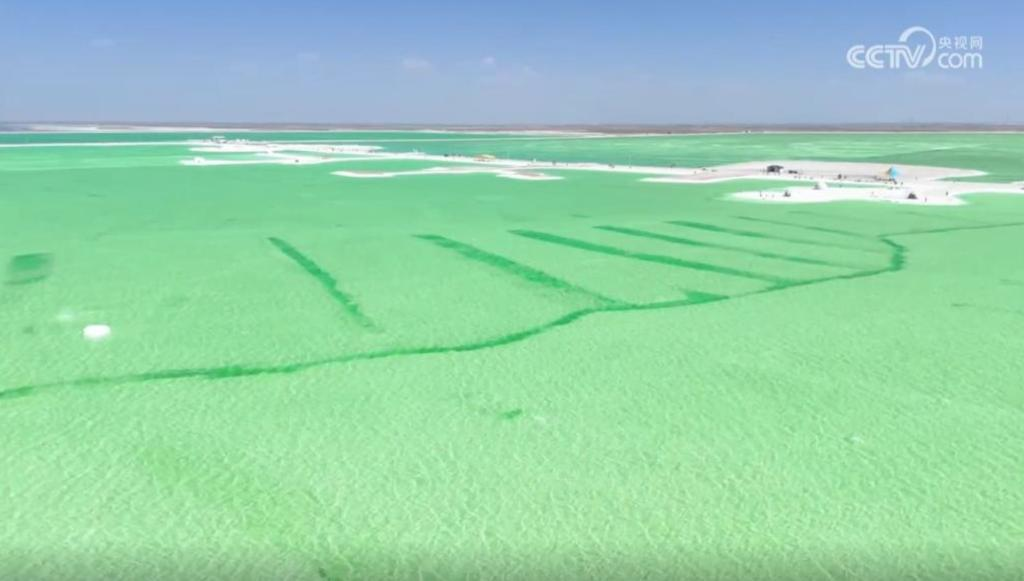
This is one of the salt lakes with the richest lithium reserves in China, Chaka Salt Lake. 75% of China’s lithium resources are stored in salt lakes on the Qinghai-Tibet Plateau, but due to the high magnesium-lithium ratio of these salt lakes, they are difficult to develop effectively. Even though China is so rich in lithium resources, it still has to import salt lake brine from abroad to meet the demand for lithium resources.
Therefore, the efficient separation of magnesium and lithium in the salt lakes of the Qinghai-Tibet Plateau has become the key to "unlocking" China’s "sleeping" lithium resources.
Zhao Zhongwei, who has been deeply engaged in the metallurgical field for decades, put forward a revolutionary idea based on his rich experience in the tungsten ore field: since metallurgical methods can be used to prepare lithium battery cathode materials, conversely, lithium battery cathode materials should be able to be used as a "tool" to extract lithium. Thus, through this new perspective opened up by reverse thinking, Academician Zhao successfully developed a new electrochemical deintercalation technology for lithium extraction from salt lake brine, solving the problem of lithium extraction from salt lake brine with high magnesium-lithium ratio.
In this regard, he shared: "Metallurgy must use simple methods to solve complex problems. In fact, during the research process, when you can’t make progress, it’s important to take an unusual path and go against the grain."
[Napoleon III, Who Attended the Feast, Wore an Aluminum Crown]
In the era of Napoleon III, nobles and ministers used gold and silver utensils at court banquets, while Napoleon wore an aluminum crown.
Hearing this answer, Xiao Sa joked directly: "Isn’t this just putting my junior high school lunch box on my head?" Academician Zhao explained with a smile that aluminum is a very active metal, and very active substances do not exist in nature. The Earth’s atmosphere contains 21% oxygen, which has a very strong oxidizing capacity, so aluminum cannot exist in this oxidizing environment. It was not until the time of Napoleon III, with the development of modern science and technology, that aluminum could be reduced from aluminum chloride by alkali metals. However, due to the level of smelting technology at that time, extracting aluminum was still very difficult, making it more precious than gold. Therefore, wearing an aluminum crown was not only a display of the scientific and technological level at that time, but also a symbol of the empire’s strength.
From the perspective of the development history of metallurgical science and technology, it is a remarkable thing to turn a metal from a royal crown into a common item in ordinary people’s lives. Today, aluminum has become a common material in our daily lives, from lunch boxes to doors and windows. China alone can produce 40 million tons of aluminum a year.
[When a Professional Teacher Starts "Hand-Drawing" Key Points in Class]
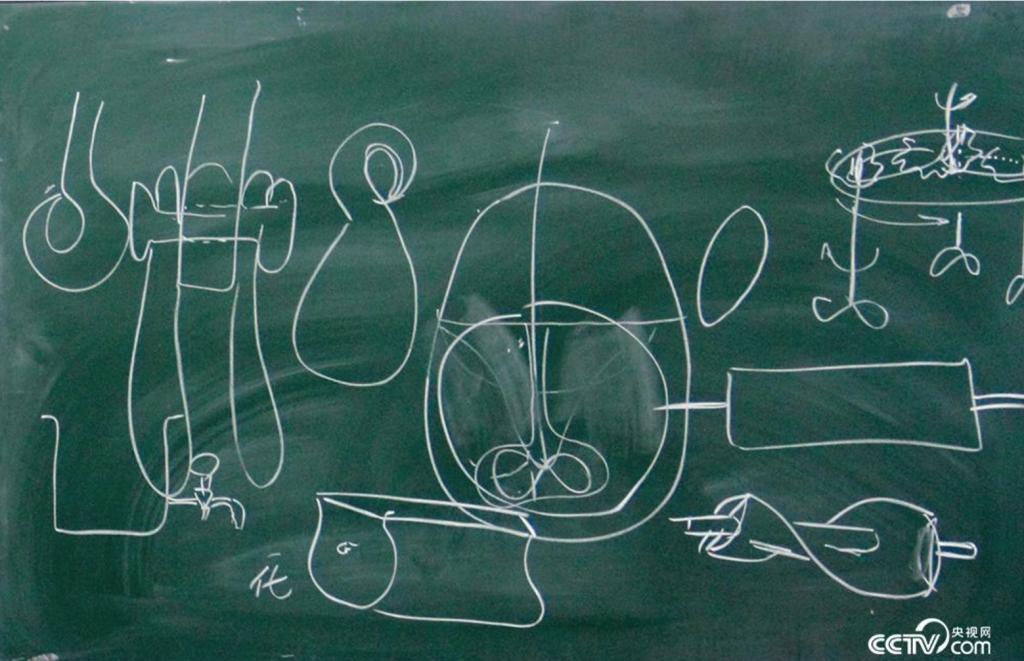
Can you imagine this is a blackboard writing in a metallurgy professional class?
That’s right, the artist behind this "blackboard writing" is metallurgy expert Zhao Zhongwei. Academician Zhao Zhongwei believes that university classes mainly focus on ideas and clarifying principles. Instead of rigidly using PPT, it is better to write and draw freely. For example, this blackboard writing mainly tells everyone about the utensils used for stirring lithium battery cathode materials and their application principles. Such utensils are not common in metallurgy, but are widely used in other industries. Through such blackboard writing, he wants to tell the students that if you only read books on metallurgy and chemical engineering when doing smelting, it is not enough. The stone from other hills can polish the jade—you must learn to flexibly apply tools commonly used in other industries to the metallurgical process to achieve real innovation and progress.
[What to Choose Between What I’m Good at and What I Like]
If your college entrance examination Chinese score is the first in the district, what major would you choose?
In the 1985 college entrance examination, Zhao Zhongwei got the first place in Chinese in Handan, Hebei. However, when he went to university, he chose a science and engineering major and embarked on the path of metallurgical research.
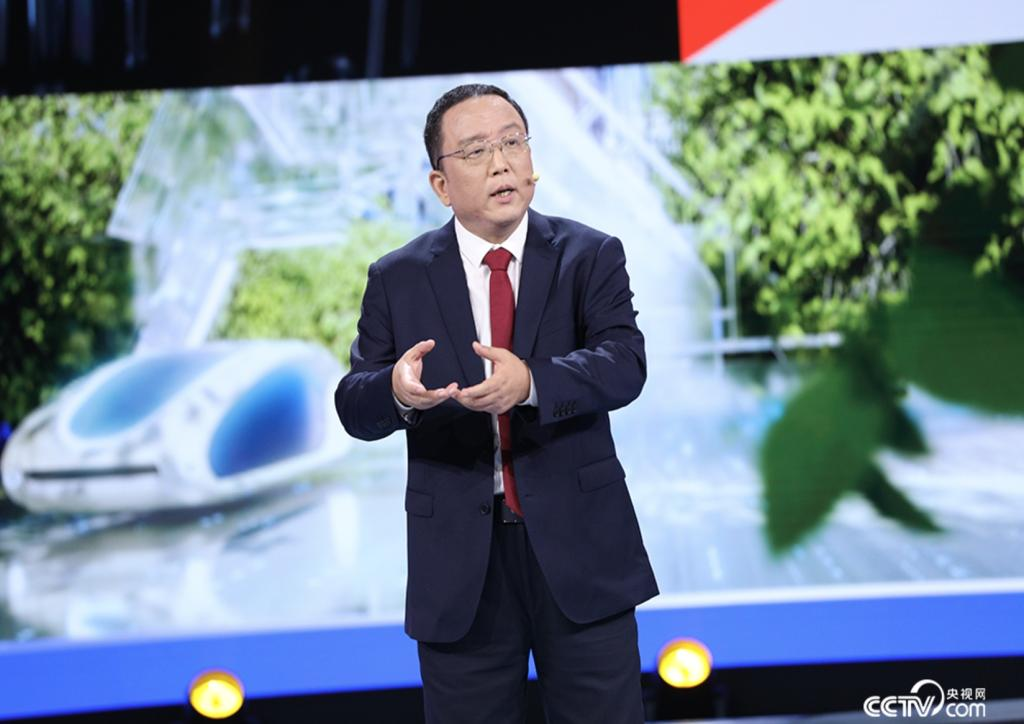
In response to this question, Academician Zhao said that he has loved reading since childhood and has always liked Chinese, but scientists such as Chen Jingrun and Einstein were role models for many young people at that time, so he wanted to engage in scientific research more and was determined to study physics to explore the theory of relativity. Unfortunately, he missed his first choice of physics, so he took the path of metallurgy. Looking back now, if he had insisted on studying physics at that time, he might not have achieved the current achievements. Therefore, people must learn to adapt to the environment. Instead of struggling with choices, it is better to move with the situation and the times.