
Release Date: January 15, 2025
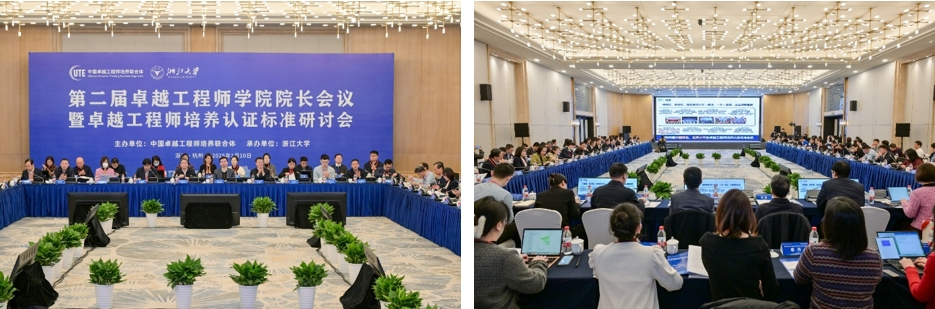
To fully implement the spirit of the National Education Conference, advance the development of national outstanding engineers colleges and accelerate the cultivation of high-caliber outstanding engineering talents, the 2nd Dean’s Meeting of Outstanding Engineers Colleges and Seminar on Training and Accreditation Standards for Outstanding Engineers was held in Hangzhou on January 10, 2025. The event was sponsored by the China Alliance for Outstanding Engineers Training and undertaken by Zhejiang University.
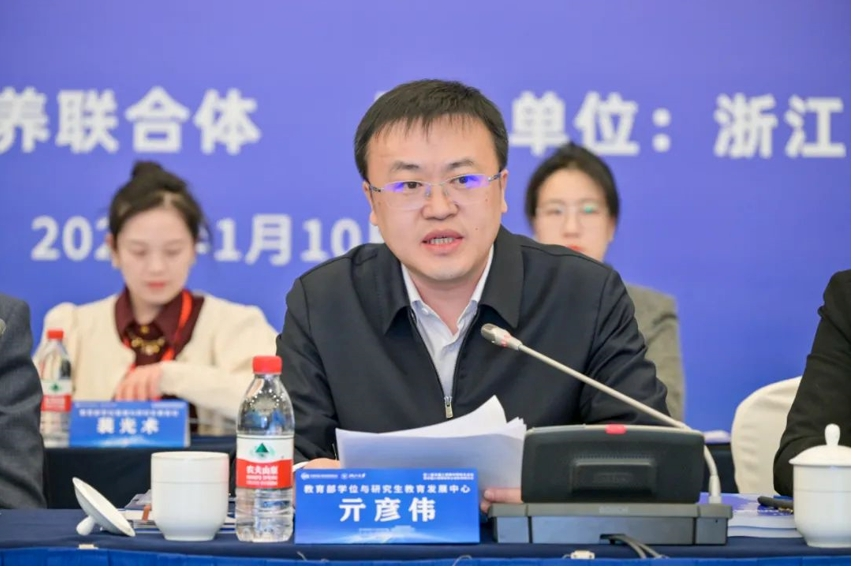
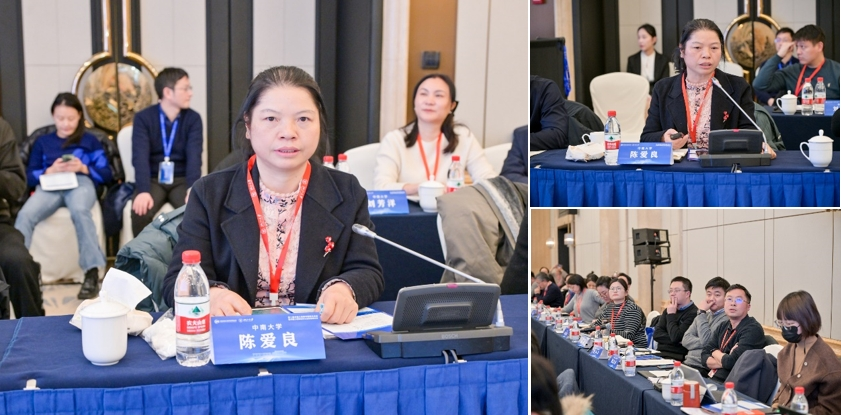
Hao Tongliang, Deputy Director-General of the Department of Degree Management and Postgraduate Education & Deputy Director of the Academic Degrees Committee of the State Council, Qi Yanwei, Deputy Director of China Academic Degrees & Graduate Education Development Center, as well as leaders and representatives from Zhejiang provincial authorities, the China Alliance for Outstanding Engineers Training, Zhejiang University, other universities running national outstanding engineers colleges and relevant enterprises attended the meeting, which was presided over by Zhao Weisheng. Chen Ailiang and Liu Fangyang, Vice Presidents of our college, participated in the meeting, and Vice President Chen Ailiang delivered an on-site report.
Deputy Director-General Hao Tongliang exchanged views with participants and delivered a concluding speech. He stated that the Party Leadership Group of the Ministry of Education takes the reform of outstanding engineers training as a major political task, and steadily promotes the restructuring of training systems, optimization of training procedures, upgrading of competency cultivation and reform of evaluation mechanisms. The construction of national outstanding engineers colleges is of great significance and sets higher requirements for education reform, talent training mode innovation and institutional improvement.
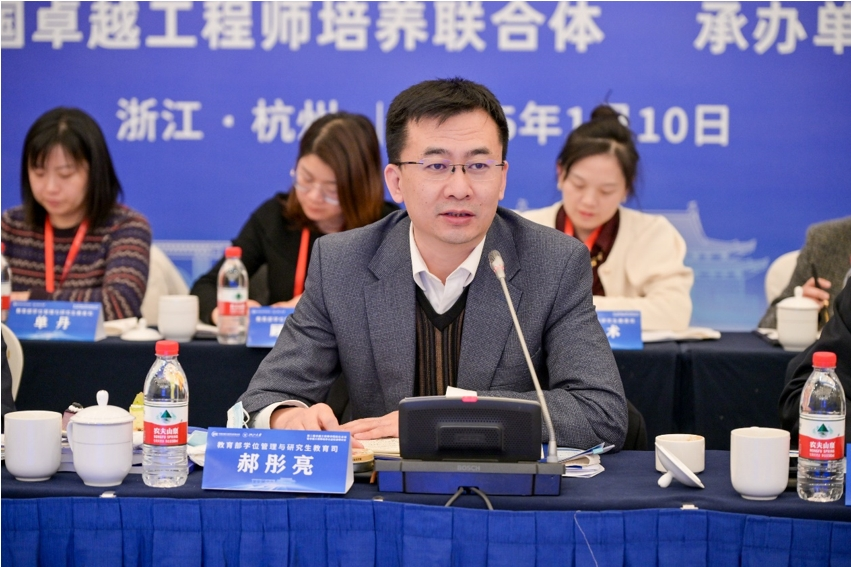
He stressed that in terms of system restructuring, substantial institutional entities with full-time faculty, independent venues and distinctive rules should be established. In optimizing training procedures, universities and enterprises should jointly carry out enrollment, curriculum design and practical training, and offer joint guidance on thesis research and career development based on national and corporate demands. For competency upgrading, innovations should be made in curriculum setting, tutor team building and research project arrangement, and new approaches to ideological and political education for engineering masters and doctors should be explored. In reforming evaluation mechanisms, new standards for degree application based on practical achievements shall be implemented, and evaluation systems for teachers and disciplines shall be optimized.
He pointed out that efforts should be further made to improve the accreditation standard system for outstanding engineers training. Universities and enterprises shall strictly enforce degree conferment criteria, ensure smooth graduation, employment and follow-up training for the first batch of pilot engineering postgraduates, sum up experience continuously, set exemplary models, promote replicable practices, and steadily advance the transformation of professional degree postgraduate training modes.
At the meeting, Deputy Director Qi Yanwei briefed participants on the development and application of core courses in key fields, and shared ideas on major tasks including engineering case development. Zhao Weisheng introduced the establishment of a special working group led by the Department of Degree Management and Postgraduate Education to formulate relevant training and accreditation standards, interpreted the standards in detail and put forward follow-up work plans.
With the theme Integration of Education, Science and Talents — Cultivating Outstanding Engineers with Central South University Characteristics, Vice President Chen Ailiang reported on the college’s development from three aspects: current construction progress, existing challenges and countermeasures, as well as suggestions on outstanding engineers training and accreditation standards.
She noted that centering on major national strategic needs and corporate demands for scientific research innovation and technological R&D, relying on advantageous disciplines including non-ferrous metals, medicine and rail transit, the college has established in-depth cooperation with leading new energy enterprises rooted in Central South University such as BYD and GEM, as well as large central enterprises including China Minmetals Corporation and Aluminum Corporation of China. It pursues integrated and coordinated development of education, science and talents, and strives to foster top-notch innovative engineering talents featuring "New Energy & Energy Storage Engineering +" and "Artificial Intelligence +" capabilities who can lead industrial development.
During the seminar, representatives from national outstanding engineers colleges of 32 universities and 7 central enterprises across the country delivered speeches and engaged in in-depth discussions, putting forward valuable suggestions for the reform of outstanding engineers training. The event effectively facilitated experience sharing in the construction of national outstanding engineers colleges, and laid a solid foundation for building a world-class outstanding engineers training and accreditation system with Chinese characteristics.