Release Date: 2026-01-29
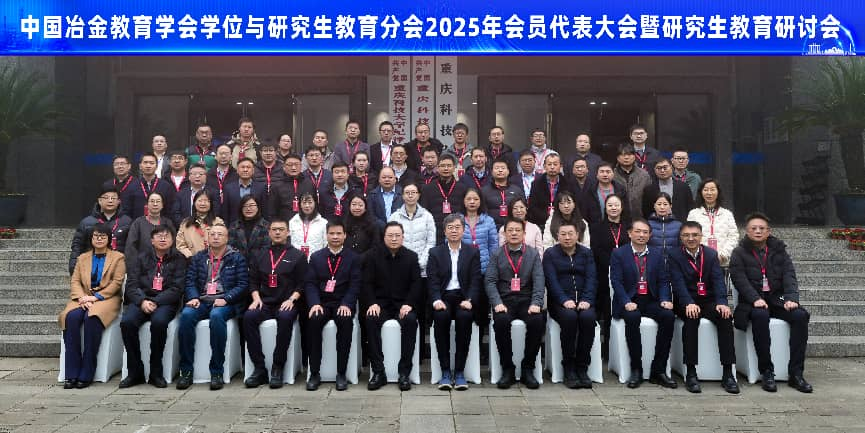
On January 17, 2026, the 2025 Member Congress and Graduate Education Seminar of the Degree and Graduate Education Branch of the China Society for Metallurgical Education was held at Chongqing University of Science and Technology. Ailiang Chen, Vice Dean of the National Graduate College for Elite Engineers, Central South University, and other delegates attended the meeting upon invitation. At the meeting, Vice Dean Ailiang Chen was elected as a standing director of the Branch, and Vice Dean Fangyang Liu was elected as a vice chairperson.
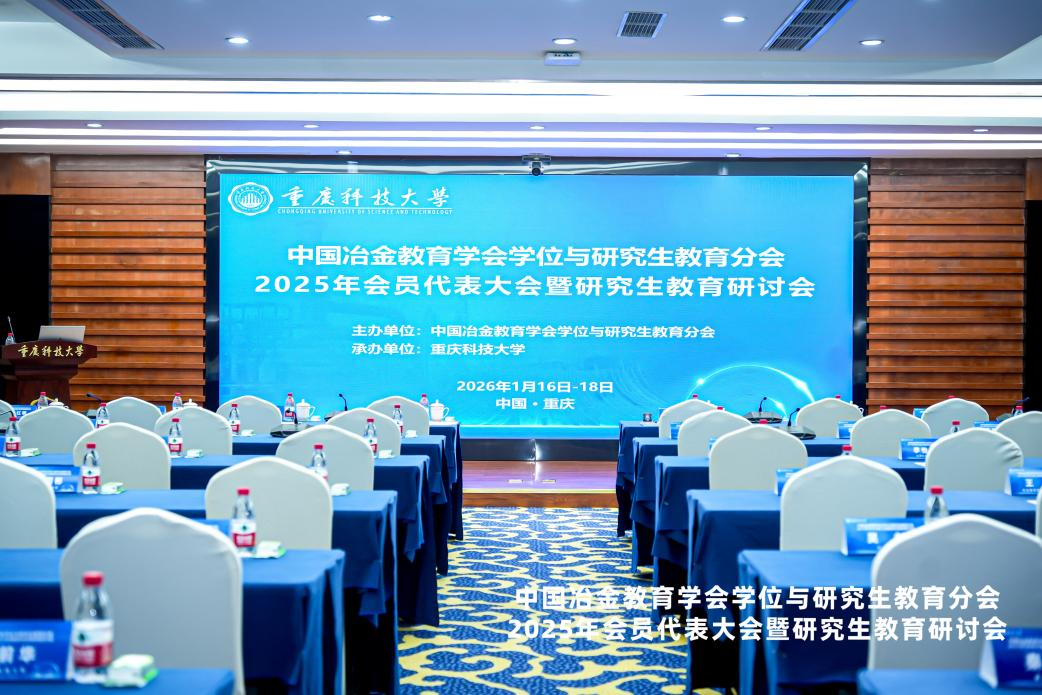
The congress aimed to thoroughly study and implement Jinping Xi Thought on Socialism with Chinese Characteristics for a New Era and the spirit of the Fourth Plenary Session of the 20th Central Committee of the Communist Party of China, build a high-level exchange platform for universities and scientific research institutes in the metallurgical industry, and promote the reform and development of graduate education. Delegates from 29 universities and research institutions, including Central South University, University of Science and Technology Beijing, and Northeastern University, attended the meeting to jointly discuss industry-specific talent training paths.
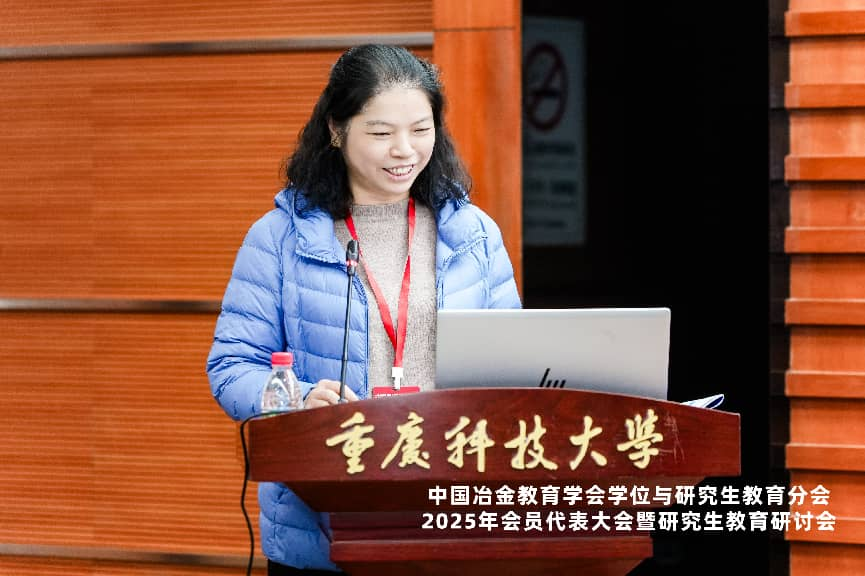
During the congress report session, Vice Dean Ailiang Chen systematically introduced the college’s explorations and achievements in cultivating elite engineers. The report emphasized that the college has always kept in mind General Secretary Jinping Xi’s important instructions on cultivating elite engineers, closely aligned with national and regional strategic needs, and relied on the university’s superior discipline chains in nonferrous metals, medicine, and rail transit to construct a university-enterprise collaborative talent training mechanism featuring "interdisciplinary integration, cultural soul-building, and industry-education integration" (the "Three Chains and Three Integrations" model). The report focused on sharing the college’s innovative measures in deepening industry-education integration. Through the "Four Reconstructions" and "Five Strengthenings," the college has broken traditional training barriers. In terms of training models, it implements a work-study alternation model to ensure that engineering master’s and doctoral students spend sufficient time on enterprise scientific research practice, striving to address "real problems" and produce "real results." In addition, the college actively promotes digital and intelligent teaching and international cooperation, establishing an "AI Elite Intelligent Teaching Innovation Center" and reconstructing the curriculum system. It has also joined forces with the Bandung Institute of Technology in Indonesia, along with leading enterprises such as Sany Group and GEM Co., Ltd., to jointly build the "China-Indonesia Elite Engineer College," expanding new avenues for the international training of elite engineers.
The "Central South Model" developed by the college in cultivating elite engineers received widespread acclaim from the participating delegates. The election of the college’s leaders as standing director and vice chairperson of the Branch further demonstrates the college’s influence and leading role in the industry. Looking ahead, the college will continue to uphold the Central South spirit of "integrating knowledge with action and applying learning to the world," deepen industry-education integration, strive to build a model for cultivating elite engineers with Chinese characteristics and world-class standards, and contribute Central South’s strength to building an education powerhouse.