
Release Date: June 9, 2026 | Author: Yu Shunyao
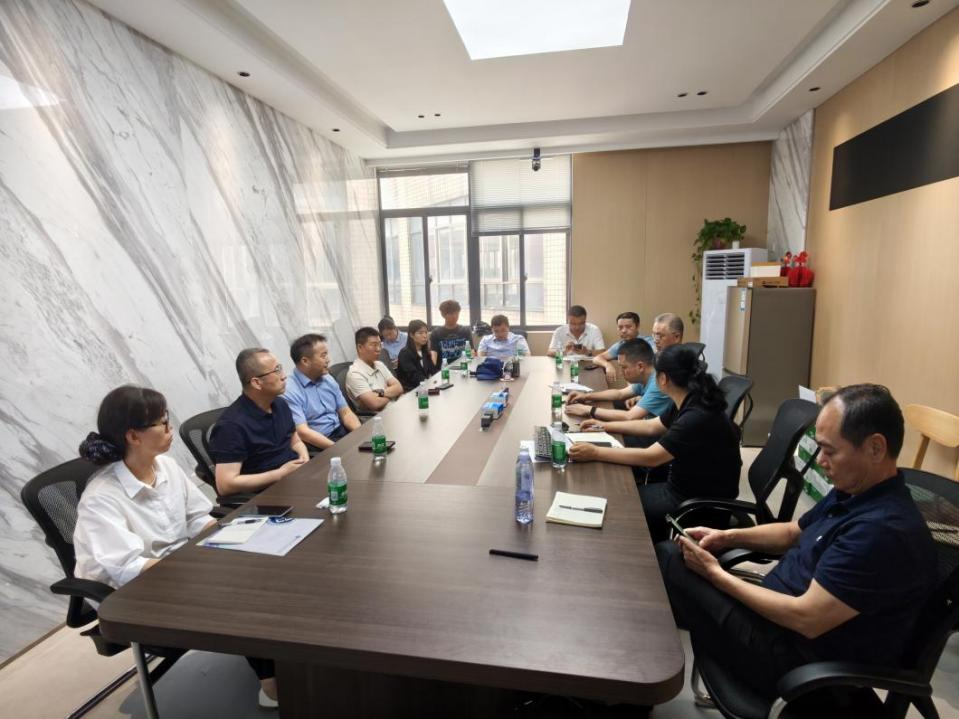
On the afternoon of June 7, the college convened a special seminar themed "Training of Outstanding Engineers" in Conference Room 417 of the Science and Education Building. Attendees included university experts and enterprise representatives: Deng Xiaoheng, Dean of the School of Electronic Information; Fang Qi, Vice President of Xiamen Tungsten Co., Ltd.; Liu Xiaoming, General Manager of the Science and Digital Department of Shenzhen Zhongjin Lingnan Nonfemet Co., Ltd.; Zhang Peng, Deputy General Manager of the Science and Digital Department of Jinchuan Group Co., Ltd.; Chen Yufa, Deputy Director of the Science and Technology Department of China Railway No.5 Engineering Group Co., Ltd.; Wang Yiyun, Deputy Dean of the Research Institute of Shandong Xinhua Pharmaceutical Co., Ltd.; Liao Yuxin, Deputy General Manager of the Demonstration & Selection Institute at the Nanchang R&D Center of Jiangxi Copper Co., Ltd.; and Luo Yingtao from Chalco Zhengzhou Research Institute. The seminar was presided over by Chen Ailiang, Vice Dean of the College.
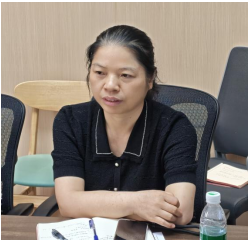
Vice Dean Chen Ailiang first introduced the construction background and phased progress of the National College of Outstanding Engineers. She pointed out that the college is actively exploring an enterprise-demand-oriented talent training model to address prominent challenges in current engineering education, such as insufficient integration of theory and practice and inadequate management of practical training processes. She emphasized that the training of engineering masters and doctoral candidates should focus on elevating engineering competencies and rebuilding innovation capabilities. The integrated advancement of education, science and technology, and talent development shall serve the national demand for tackling core technologies bottlenecking key industrial sectors.
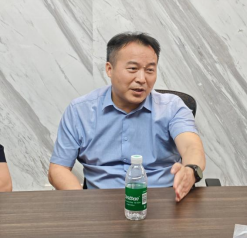
Deng Xiaoheng, Dean of the School of Electronic Information, noted that there exists a prominent generational gap in informatization, digitalization and intelligent transformation across various industries, and traditional sectors are in urgent need of technological leaps. Accordingly, he proposed that the training of outstanding engineers must break conventional disciplinary boundaries and facilitate in-depth interdisciplinary integration. Dean Deng suggested that trainees with diverse academic backgrounds develop comprehensive capabilities to solve complex engineering problems through intensive interactive learning. Meanwhile, the college should proactively engage enterprises to integrate research cooperation and talent training into a unified framework, shifting sporadic one-on-one collaboration to organized university-enterprise coordination, so as to form a closed-loop ecosystem of "project-driven research, curriculum support, and practice feedback".
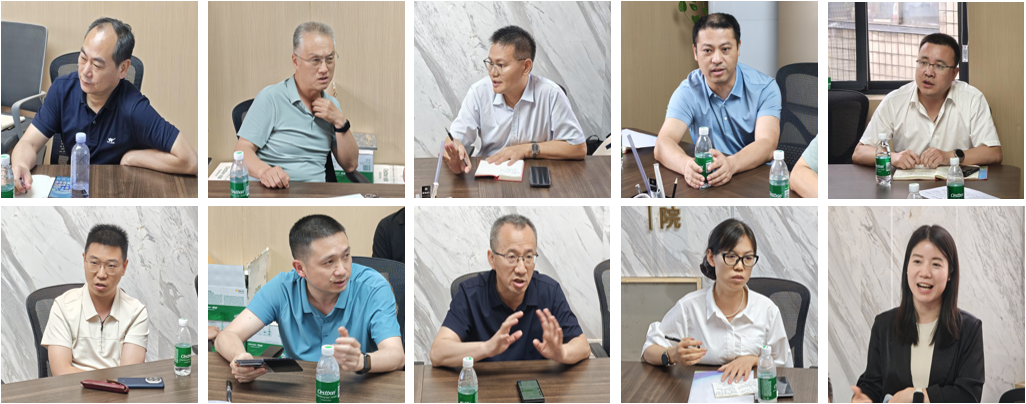
During the subsequent discussion session, participating experts engaged in thorough exchanges on core topics including trainee positioning, curriculum delivery models, research topic sources, project cooperation mechanisms, process supervision, and evaluation of practical outcomes. All participants reached a consensus that courses should combine online and offline teaching with more offline intensive seminars, while research topics should derive directly from real technical challenges on enterprise production lines. Through high-level communication between universities and enterprises, together with coordination between science and technology divisions and human resources departments, joint research projects can be planned and launched in advance.
Experts also recommended strengthening joint university-enterprise reviews at thesis proposal and mid-term defense stages, and establishing a flexible evaluation system oriented toward practical achievements. They shared successful enterprise practices where researchers "arrive with research projects and return with deliverables", demonstrating tangible outcomes of collaborative research between universities and enterprises. In addition, delegates put forward constructive suggestions on practical operations such as opening enterprise mentor pools, deploying AI platforms, and offering flexible elective courses, laying feasible groundwork for building an open, flexible and efficient engineering education ecosystem.
The successful convening of this seminar marks a solid stride forward for the college in deepening industry-education integration and advancing engineering education reform. Through in-depth dialogue and brainstorming, universities and enterprises aligned consensus and clarified implementation paths, laying a solid foundation for the smooth rollout of follow-up special programs. The college will systematically sort out seminar outcomes, further optimize training programs and working mechanisms, and deepen substantive university-enterprise collaboration. It strives to build a "Central South University Model" for national outstanding engineer cultivation, and deliver a steady stream of outstanding engineers to strategically vital national fields — talents who are loyal to the Party, dedicated to serving the country, devoted to their careers, equipped with remarkable technological innovation capacity, and adept at resolving complex engineering challenges. On the journey of engineering education reform in the new era, the college will respond to the nation’s urgent demand for top-tier engineering talents with concrete actions.